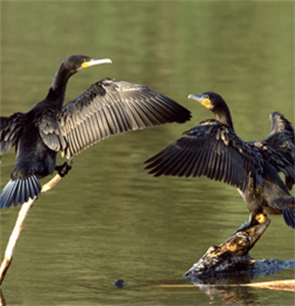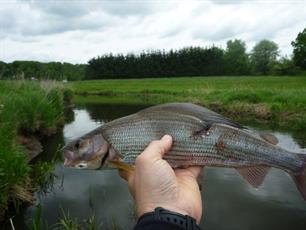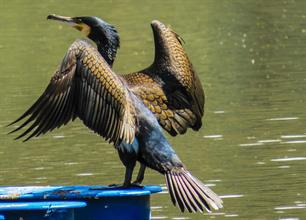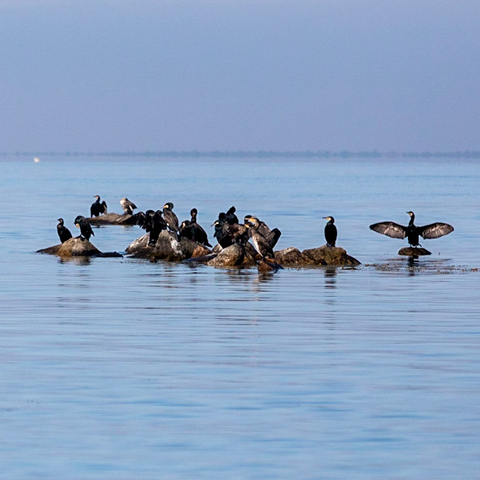
In 2008, the European Parliament urged the European Commission to promote coordinated, sustainable management of cormorant populations and to create conditions for a Europe-wide management plan. This request was not acted upon and remains fully relevant today. Europe’s cormorant population is still estimated at around two million birds, with significant impacts on threatened and protected fish species and on fishing quality in inland and coastal waters.
While the Commission maintains that coordinated use of derogations under the Birds Directive is sufficient, the ongoing scale of damage demonstrates that current approaches are inadequate.
Against this background, find the following summary of the key point and EAA position. This position underlines the need to move from fragmented national responses towards coordinated, science-based management of cormorants in Europe.
The full position paper, including notes and references, can be downloaded below.
- Effective use of Article 9 derogations >> Member States should make full and coordinated use of Article 9 of the Birds Directive to protect fisheries, fish stocks, and aquatic ecosystems from cormorant damage.
- Introduction of regional management plans >> Where pan-European consensus is lacking, regional cooperation is a pragmatic first step.
- Nordic–Baltic cooperation as a pilot model >> The Nordic–Baltic region hosts over 50% of Europe’s breeding cormorants, whose impacts extend far beyond the region during migration and wintering.
- Build on existing scientific capacity >> Countries such as Denmark, Sweden and Finland already conduct regular population counts and have strong knowledge of migration patterns—essential foundations for science-based management.
- Address lack of coordination >> Although Baltic Sea states manage cormorants to varying degrees, actions remain largely uncoordinated and therefore less effective.
- Flexible participation >> Not all Baltic states need to participate from the outset; the scheme should remain open to interested countries such as Norway or the UK.
- Substantial but phased population reduction >> A controlled reduction of cormorant numbers is needed to alleviate widespread ecological and fisheries impacts.
- Apply adaptive management >> Adaptive management allows annual adjustment while safeguarding the species’ favourable conservation status.
- Reduce long-term costs and conflicts >> Lower population levels would reduce recurring damage, management efforts and associated costs across Europe.
- Balance conservation with socio-economic needs >> In line with Articles 1 and 2 of the Birds Directive, bird protection must also consider ecological balance, economic interests and recreational fishing.