Recreational angling as a tool for shark conservation
Whereas in the 60s and 70s of the last century sharks were still regularly caught in the Voordelta – the shallow sea and surrounding beaches off the South Holland and Zeeland islands – and the Wadden Sea, overfishing ensured that these special fish were absent for more than forty years.
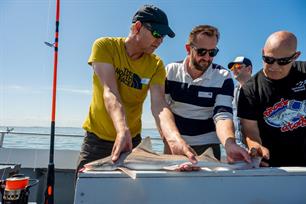
From 2009 onwards, sharks reappeared in the waters of Zeeland, which prompted Sportvisserij Nederland and Wageningen Marine Research in 2011 to start a special tagging programme to conduct research on sharks and rays. The flagship of this is Sharkatag, a multi-day event in which anglers catch sharks that are tagged so that they can be tracked after they have been released. In addition to this July event, charter skippers and researchers also tag sharks and rays for research purposes during the rest of the year.
Dutch EAA member, Sportvisserij Nederland works closely with the Dutch government, Wageningen Marine Research, nature organizations such as WWF-NL, fisheries biologists and the fishing sector.
In the summer months, large concentrations of spotted smooth-hounds gather here. The participants will try to catch them with the rod under professional supervision, on board boats of the Dutch Charter Boat Association (DNCV).
Quick facts from Sharkatag 2025
-
•Over 600 sharks were caught and tagged across three days
•300 sharks were caught on the event’s final day alone!
•More than 5000 sharks tagged since the programme’s launch in 2011
•Collaborative efforts involving government, science, NGOs and anglers

Niels Brevé, shark researcher at Sportvisserij Nederland: “Thanks to the feedback of tagged fish and data from tagged sharks, we have already learned a lot. For example, the Zeeland Delta appears to be a very important aggregation area for international shark and ray populations.
There are also strong indications that the sharks spawn here with us and that the pupping grounds or nurseries of the spotted smooth-hound are located in the Oosterschelde. This was not known a few years ago, but it is essential information. This shark species is not doing well – its IUCN status is: near threatened.” In addition to spotted smooth-hound sharks, the research also focuses on rough sharks, stingrays and stingrays.
There are also strong indications that the sharks spawn here with us and that the pupping grounds or nurseries of the spotted smooth-hound are located in the Oosterschelde. This was not known a few years ago, but it is essential information. This shark species is not doing well – its IUCN status is: near threatened.” In addition to spotted smooth-hound sharks, the research also focuses on rough sharks, stingrays and stingrays.
Sharkatag: a flagship event higlighting recreational fisheries’ added value to key stakeholders

Sharkatag is not only about recreational fishing, but also about experience and education. This was evident once again on 11 July, when a group of vulnerable young people participated in the event. They experienced a day full of fun, excitement and connection with nature. “A great success,” says project manager Niels Brevé from Sportvisserij Nederland.
“In the beginning, people are often still a bit cautious. But when they catch their first shark, you see that the tension gives way to pure wonder. It gives a real adrenaline boost and stays with you.”
This year’s edition also attracted key political figures including BBB leader Caroline van der Plas and NSC MP Diederik Boomsma. Both politicians joined the event to witness firsthand the importance of shark research along the Zeeland coast. It provided a valuable opportunity for Sportvisserij Nederland to highlight the socio-economic and environmental significance of recreational fisheries, and to advocate for measures such as a legal catch-and-release obligation for sharks and rays—an essential step toward sustainable marine conservation policy.
The event was a truly unique experience, not only because of the catches, but also because of being on the water together, the respectful treatment of nature and fish, and the fact that all sharks are released alive after measuring and tagging. This makes Sharkatag an example of responsible sport fishing in combination with scientific research.