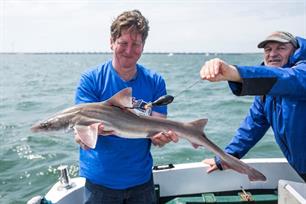
This year again, Sportvisserij
Nederland will charter several boats on a fishing trip to catch, tag and
release sharks. In the past, this experience has demonstrated that in just a
few days, anglers can tag more than 100 sharks. All sharks are released alive
right after being tagged or simply registered (for smaller specimens). The
tagging is external and causes no pain.
In 2019, a total 4500 sharks were
tagged, which gave very valuable information about the population, the individuals’ growth,
distribution, migration routes, spawning and growing areas, etc. Concerning migration for
example, this work helped understand that male sharks migrate to Scotland while
females go to the Gulf of Gascony. Indeed, female sharks migrate to warmer waters in
winter and then return to the North Sea to reproduce.
These findings have been
published in scientific journals and have brought new knowledge about sharks.
This information is now used to
protect sharks and their ecosystems in the North Sea and to better inform
recreational anglers.
This year, Sportvisserij Nederland will
also invite government and elected officials, NGO representatives and
scientists to join in some tagging outings, to raise awareness about anglers’
work and shark conversation.
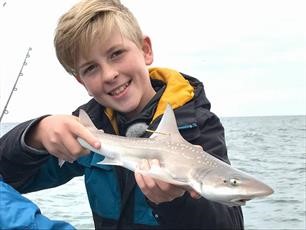
and ears of the aquatic environment. They act as whistleblowers and play a key role in
the conservation of fauna and flora. The Sharkatag is a great example of this key
role played by anglers.
Access to the website: here
Access to the video: here
Pictures credit to Sportvisserij Nederland